
Reviewed by Amir Khela, PharmD

Yes, but only for some infections. In Ontario, a pharmacist can assess you and prescribe an antibiotic for an uncomplicated bladder infection (UTI), bacterial pink eye or impetigo, and can give a single preventive dose after a high-risk tick bite. Ear infections, strep throat and sinus infections are not on the list yet, so for those you still need a doctor or nurse practitioner.
The pharmacist’s assessment is covered when you show a valid Ontario health card. You only pay for the medicine, and your drug plan may cover that too.
Why Ontario pharmacists can prescribe at all
Since January 2023, Ontario has allowed pharmacists to assess and prescribe for a set list of "minor ailments": common, short-term health problems that a pharmacist can safely recognize. The list started with 13 conditions, grew to 19 in October 2023, and reached 28 on July 1, 2026.
Most of those 28 are treated with creams, drops, sprays or tablets that are not antibiotics. Only a handful are bacterial infections where an antibiotic is the right treatment. That is why the honest answer to "can a pharmacist prescribe antibiotics?" is "sometimes".
Infections a pharmacist can treat with an antibiotic
Bladder infections (uncomplicated UTIs)
This is the one people ask about most. A pharmacist can assess the usual signs of a bladder infection, such as burning when you pee, needing to go often or urgently, and discomfort low in your belly, and prescribe an antibiotic if it fits.
The pharmacist will send you to a doctor or the emergency department instead if the infection may not be a simple bladder infection: for example if you have a fever, pain in your back or side, are pregnant, are male, or keep getting UTIs. For the full picture, read our guide on when to see a pharmacist for a UTI in Ontario.
Bacterial pink eye
Pink eye (conjunctivitis) can be caused by bacteria, viruses or allergies, and only the bacterial kind needs antibiotic eye drops. Bacterial pink eye often comes with thick yellow or green discharge and eyelids stuck together in the morning. Viral pink eye is usually watery and clears up on its own, and allergic pink eye itches.
The pharmacist looks at your eye, asks a few questions and prescribes antibiotic drops only if it looks bacterial. If you have eye pain, blurred vision or trouble with bright light, you will be sent to a doctor or eye clinic straight away. If you wear contact lenses, tell the pharmacist. More on our pink eye page.
Impetigo
Impetigo is a common skin infection, most often seen in children. It causes red sores that break open and form honey-coloured crusts, often around the nose and mouth. When it covers a small area, a pharmacist can prescribe an antibiotic cream or ointment. If it is spreading quickly, covers a large area or comes with a fever, the pharmacist will refer you to a doctor. See our impetigo page.
A tick bite that could lead to Lyme disease
This one is prevention, not treatment. If a blacklegged (deer) tick was attached to you for a day or more in an area where Lyme disease is found, a pharmacist can prescribe a single dose of an antibiotic to lower your chance of getting Lyme disease. It works best within 72 hours of removing the tick, so come in soon. If you can, bring the tick in a sealed bag or a clear photo of it. More on our tick bite page.
What a pharmacist cannot prescribe antibiotics for (yet)
- Ear infections. Not on Ontario’s list. Outer ear infections ("swimmer’s ear") have been proposed for the future, but they are not part of the program yet.
- Strep throat and other sore throats. Sore throats ("acute pharyngitis") have also been proposed but not added. A doctor or nurse practitioner can test you for strep.
- Sinus infections. Since July 2026 a pharmacist can help with nasal congestion from a cold, but that congestion is caused by a virus and antibiotics do not help it. A bacterial sinus infection needs a doctor.
- Colds, flu and COVID-19. These are viruses. Antibiotics do nothing against them, and taking them when you do not need them can cause side effects and makes future infections harder to treat. Your pharmacist can still suggest something for the symptoms.
- Bacterial vaginosis (BV). Not on the list. Vaginal yeast infections are, and a pharmacist can treat those, but yeast is a fungus, so the treatment is an antifungal, not an antibiotic.
- UTIs in men. These count as complicated and need a doctor.
What happens when you come in
- Walk in or book a time. Cloud Pharmacy is at 55 Dundas St E, a short walk east of Yonge St, and is open Monday to Friday 8:30 am to 7:30 pm and Saturday and Sunday 9 am to 5 pm.
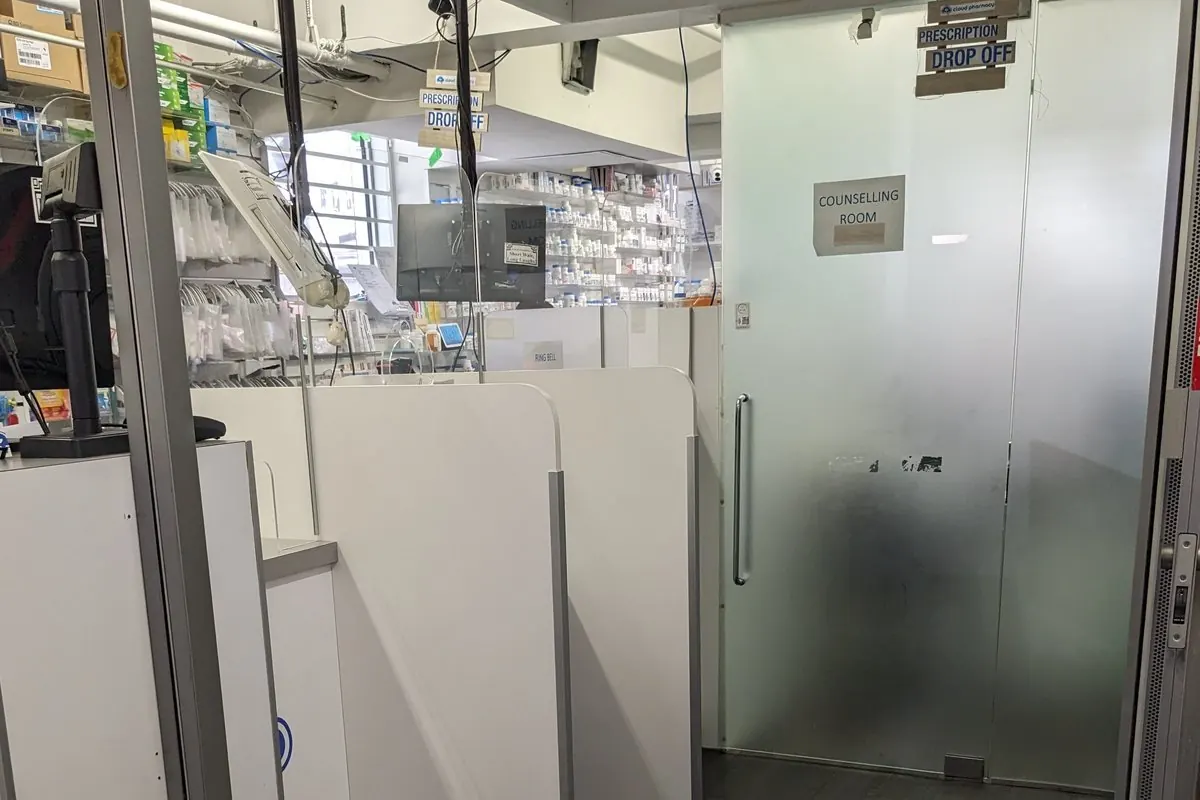
- Talk to a pharmacist in private. You will be asked about your symptoms, your health history, the medicines you take and any allergies.
- Get a decision. If your problem is one of the conditions on the list and it is safe to treat, the pharmacist writes the prescription. If it is not, they tell you why and where to go.
- Get your medicine. We fill the prescription right away.
Bring your Ontario health card and a list of the medicines you take, or just bring the bottles.
What it costs
- The assessment: covered by the province for Ontario residents with a valid health card. If you do not have an Ontario health card, call us at 647-748-1337 before you come and we will tell you your options.
- The medicine: you pay the usual price unless a drug plan covers it. OHIP+ covers most prescriptions for people 24 and under who have no private plan, the Ontario Drug Benefit covers people 65 and older, and most private plans cover antibiotics.
When to see a doctor or go to the emergency department
See a doctor, or go to emergency, if you have a high fever, severe pain, symptoms that are getting worse quickly, eye pain or vision changes, or an infection that has not improved after you finish the treatment. In an emergency, call 911. For advice day or night, you can also call Health811, Ontario’s free health line.
Frequently asked questions
Can I get antibiotics without a doctor in Ontario?
Yes, from a pharmacist, but only for the conditions on Ontario’s minor ailments list where an antibiotic is the right treatment: uncomplicated bladder infections, bacterial pink eye, impetigo and the single preventive dose after a high-risk tick bite.
Can a pharmacist prescribe antibiotics for an ear infection in Ontario?
Not yet. See a doctor or nurse practitioner, or visit a walk-in clinic.
Is the pharmacist’s assessment free?
It is covered for Ontario residents with a valid health card. You pay only for the medicine, unless your drug plan covers it.
Do I need an appointment at Cloud Pharmacy?
No. Walk in any day during opening hours, or book a time online if you prefer.
Which other conditions can an Ontario pharmacist treat?
All 28 are listed on our minor ailment prescribing page, including acne, cold sores, acid reflux, allergies, ringworm, head lice and dry eye.